This article contains affiliate links. If you buy through our links, we may earn a small commission at no extra cost to you. This helps us keep The Home Energy Hub running. Full disclosure.
The short answer
Charging an electric car at home costs £8–£16 for a full charge on a standard electricity tariff, giving you roughly 200–300 miles of range. That works out to about 6p per mile on the standard rate, or nearer 2p per mile on an overnight EV tariff — between a sixth and a half of what you'd spend on petrol.
But those headline figures hide a wide range depending on three things: your car's battery size, your electricity rate, and whether you charge smart or dumb. Let's break it down properly.
Charging costs by tariff type
All figures below assume a 60kWh battery (typical for cars like the Tesla Model 3, Hyundai Ioniq 5, or VW ID.4) charged from 10% to 80% — the way most people actually charge at home.
Standard variable tariff (26.32p/kWh): A 70% charge (42kWh) costs roughly £11.05. Over a year of typical UK driving, 8,000 miles at around 3.2 miles per kWh is about 2,500 kWh, so that's roughly £660 in electricity once charging losses are included.
Octopus Intelligent Go (7.5p/kWh off-peak): The same 42kWh charge drops to about £3.15. Annual cost falls to £190–£220 — genuinely cheaper than running a bicycle if you factor in maintenance. Intelligent Go automatically shifts your charging to the cheapest overnight hours.
Octopus Agile (variable, often 0–10p/kWh overnight): With careful scheduling, you can regularly charge for £1.50–£4.00. Some nights the rate goes negative and you're literally paid to charge. Annual costs can be as low as £100–£180.
Solar panels (effectively 0p/kWh for surplus): If you have a 4kW+ solar array and charge during the day, your marginal cost is zero. In practice, most people can cover 40–60% of their charging from solar between April and September.
How to calculate your exact cost
The formula is simple: Battery size (kWh) x Charge percentage x Electricity rate = Cost.
For example, a Nissan Leaf with a 40kWh battery, charging from 20% to 80% (60% = 24kWh) on Intelligent Go at 7.5p/kWh: 24 x £0.075 = £1.80.
Use our EV charging cost calculator to get a personalised figure for your exact car and tariff. If you also have solar, a heat pump or a home battery, our smart meter savings calculator puts the EV-tariff saving into context alongside the rest.
Home charger vs three-pin plug
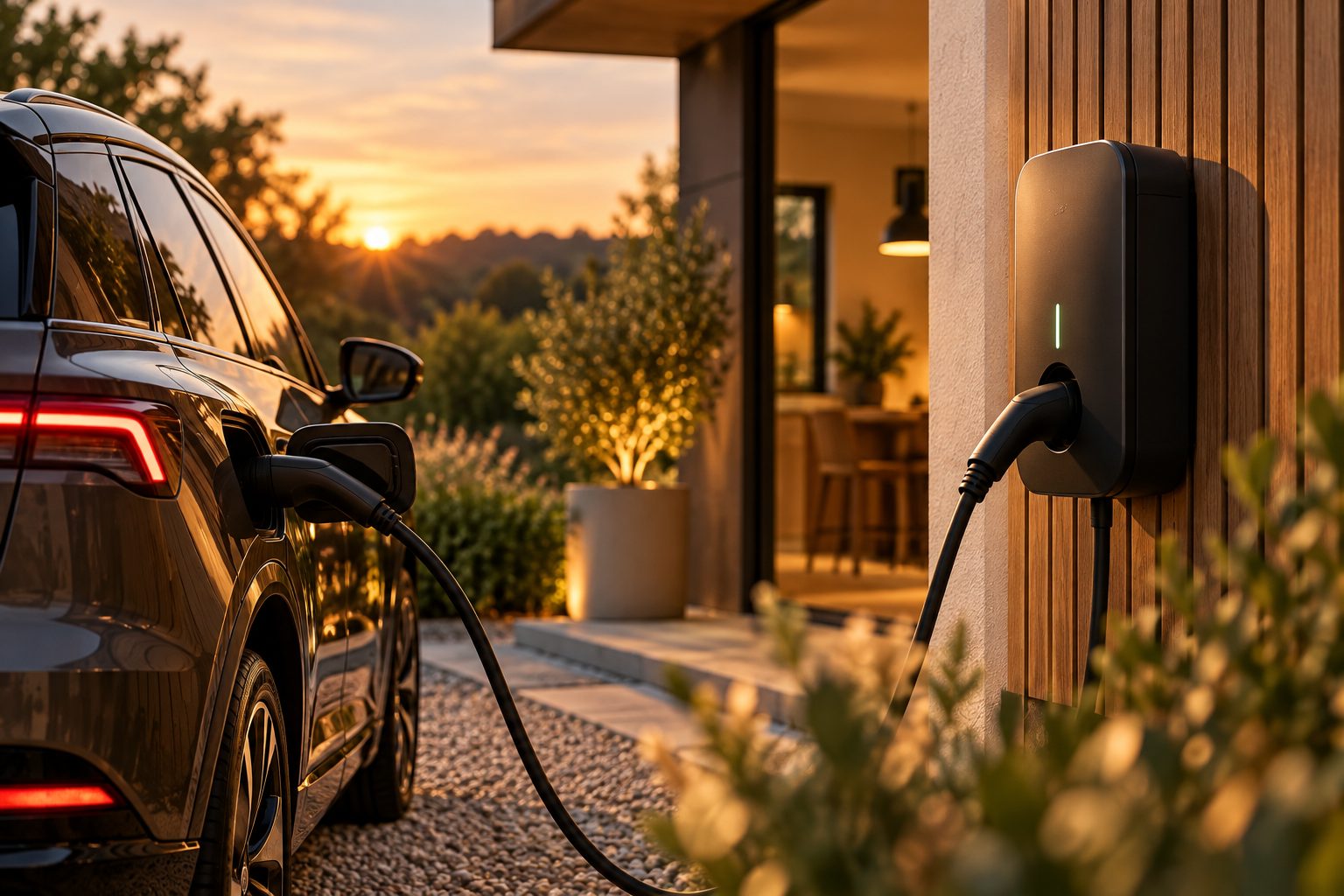
You can technically charge an electric car from a standard three-pin socket, but it's painfully slow — around 8 miles of range per hour. Most cars don't include a 3-pin cable in the box, so you'll need a dedicated granny charger cable (typically £130–£200 from specialists like EV Cable Shop). A dedicated 7.4kW wallbox gives you 25–30 miles per hour, meaning a typical overnight charge easily fills your battery.
The cost per kWh is identical either way — the difference is speed, safety, and smart features. A home wallbox with smart tariff integration (like the Ohme Home Pro or Zappi) can automatically shift your charging to the cheapest hours without you lifting a finger.
Installation costs for a 7kW wallbox (see our tethered vs untethered EV charger comparison for which cable format suits your driveway) range from £800–£1,200 fully installed (the unit itself is £350–£700, and most installers charge £400–£500 for a standard fit). At typical smart tariff savings of £600–£800 per year versus standard rates, the charger pays for itself within 12–18 months. See our best EV charger guide for our top picks, or our best EV tariff UK 2026 comparison to choose between Intelligent Go, Go, OVO Charge Anytime and the major-supplier alternatives.
Home charging vs public charging
Public rapid chargers cost 40–79p/kWh depending on the network, making a full charge £25–£50. That's 3–5x more expensive than home charging on a standard tariff, and up to 15x more than smart tariff charging.
The maths is clear: if you can charge at home, you should. Public chargers make sense for long journeys, but using them as your primary charging method is like filling up at a motorway service station every week.
Five ways to cut your EV charging costs
Switch to a smart EV tariff. This is the single biggest saving. Octopus Intelligent Go, OVO Charge Anytime, or British Gas Electric Driver all offer off-peak rates of 7–10p/kWh. Switching takes 10 minutes and saves £500–£800 per year.
Set your charge limit to 80%. Charging from 80% to 100% is slower and uses more energy proportionally. Unless you need maximum range tomorrow, capping at 80% saves energy and extends your battery's lifespan.
Precondition while plugged in. Heating or cooling your car while it's still connected to the charger uses mains electricity instead of battery power. In winter, this can save 10–15% of your battery per journey.
Time your charging. Even without a smart tariff, electricity is cheapest between midnight and 5am. Use your car's built-in timer or your wallbox app to schedule charging for these hours.
Add solar panels. A 4kW system costs £5,000–£7,000 installed and generates enough surplus to cover a significant portion of your charging for free, especially if you work from home or can charge during the day. Pair it with a home battery and you can shift solar surplus to overnight EV charging windows so you keep the cheap off-peak unit rate even when you're charging by day. See our solar panel costs guide for a full pricing breakdown, and check whether you qualify for any solar panel grants.
The bottom line
Home EV charging in 2026 costs between £250 and £1,150 per year depending entirely on your tariff choice. The smartest move is combining a dedicated wallbox with an EV-specific tariff — that gets your per-mile cost down to 2–3p, compared to 16–22p for petrol.
Get your personalised cost estimate with our EV charging calculator.
Work out your own charging costs
Your mileage, your tariff and your charger, rather than an average — no email required.